
SMT Splicing: Why Missing Standards Become a Production Problem
Splicing is one of the fundamental processes in SMT manufacturing. As soon as a component tape runs empty, it must be connected quickly and without interrupting the ongoing production process whenever possible. Despite being a routine task, SMT splicing is often not treated as a standardized process in many production environments. Instead, individual methods develop that vary from operator to operator.
What is often overlooked:
The way SMD tapes are spliced has a direct impact on the stability of the entire production line.
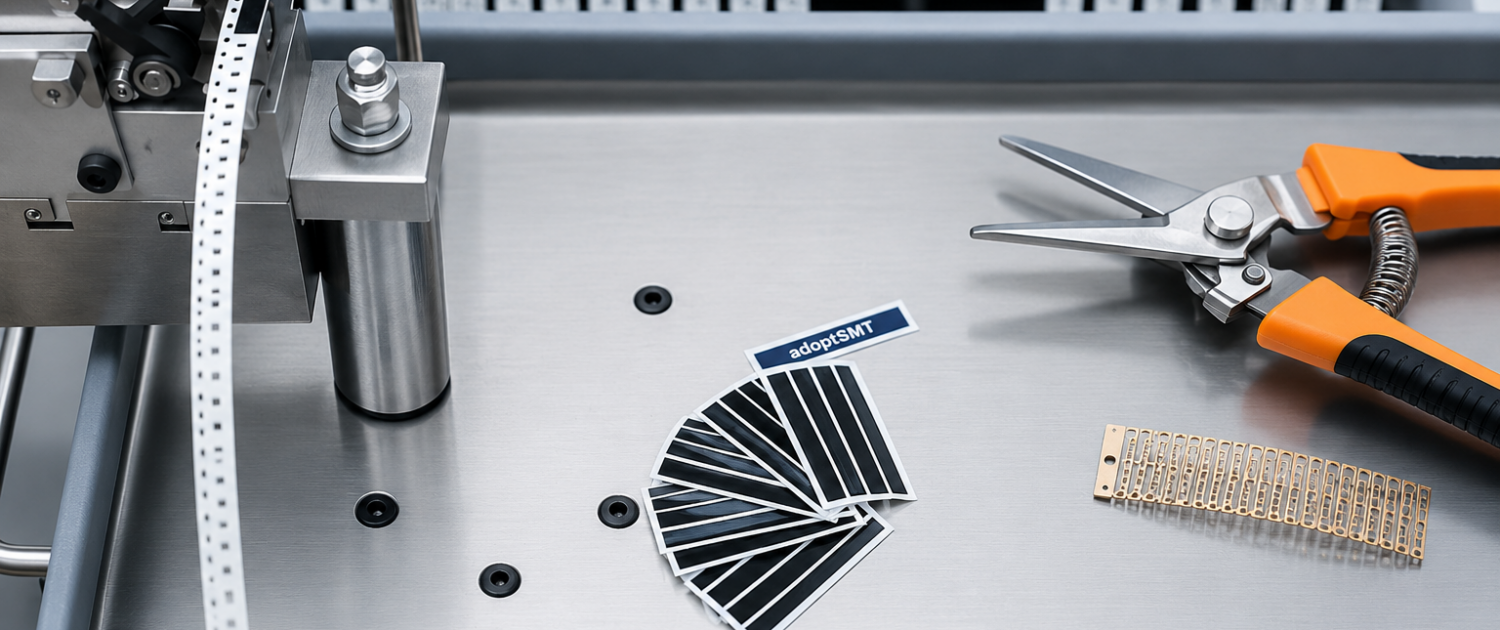
Why SMT Splicing Is More Than Just a Simple Task
At first glance, connecting component tapes may seem like a simple operation. In practice, however, it is a highly sensitive point within the material flow.
Poorly executed SMD tape splicing can result in:
• the tape not feeding smoothly through the feeder
• inaccurate positioning
• increased operator attention during production
These effects rarely occur in isolation. They influence the overall performance of the SMT production process — often gradually and difficult to trace.
The Challenge: Missing Standards in the Splicing Process
Many companies lack a clearly defined process for SMT splicing.
Different materials, varying tools, and individual working methods lead to an inconsistent process. The result is increased deviations within production.
Especially in highly automated production lines, these deviations become a serious issue. Stable manufacturing processes rely on repeatability — not on individual solutions. A standardized approach to splice tape handling in SMT production ensures:
• consistent quality
• clearly structured workflows
• reduced dependency on individual operators
Standardization in SMT Splicing as an Efficiency Factor
A structured splicing process does not begin at the machine — it starts during preparation. When all required materials and tools are available and coordinated, an improvised task becomes a clearly defined process. This is where the splicing cart becomes an important part of the workflow.
It provides production operators with all required materials and tools directly at the line. Thanks to its compact and practical design, the cart does not get in the way and integrates perfectly into existing production environments. Especially within lean manufacturing concepts, the splicing cart helps create organization, shorter walking distances, and a structured workspace — everything from one source and everything in its place.
The goal is not to make the process more complex, but reproducible.
Standardized SMT splicing means: Every step is defined, every component is standardized, and every result becomes comparable. This not only reduces potential errors, but also simplifies training and onboarding for new employees.
A Structured Approach for Getting Started
In practice, the question is often not whether standardization should be implemented — but how. This is exactly where many manufacturers face challenges: Individual components may already exist, but a complete and coordinated system is often missing.
A complete setup can significantly simplify the transition. The Splicing SET Professional combines all relevant components for SMT splicing in one solution:
• splice tapes for different tape widths
• tools for precise handling
• accessories for daily production use
The advantage lies in immediate usability and a clearly structured setup. Instead of combining individual components, users receive a coordinated system that simplifies the transition toward a standardized splicing process.
Conclusion: SMT Splicing as Part of a Stable Production Process
Connecting component tapes may seem like a small part of SMT manufacturing, but it plays a critical role in overall production stability. Without clear standards, deviations arise that can negatively affect quality and efficiency over time. A structured approach to SMD tape splicing creates stability, consistency, and transparency within the process.
The implementation effort is relatively small — but the impact on production performance can be significant.
Companies looking to simplify the transition toward a standardized splicing process should rely on a coordinated complete solution. For this reason, we will soon introduce a special monthly offer designed specifically for an easy and professional start into standardized SMT splicing.
Subscribe to our newsletter and never miss upcoming promotions:
Look forward to a perfectly coordinated starter set for professional SMT splicing — including accessories, tools, and practical solutions for improved efficiency directly at the production line.


 MICAS AG


