
Choosing Your IC Programming Strategy
Comparing offline programming with ISP and hybrid workflows
EMS providers, OEMs and ODMs involved in IC programming face an important decision: should devices be programmed offline before SMT assembly, or by in-system programming (ISP) after PCB assembly? This choice affects capital investment, test fixture design, manufacturing efficiency and overall production throughput.
Both methods have advantages and limitations. The following comparison helps manufacturers choose the right programming strategy for their production requirements
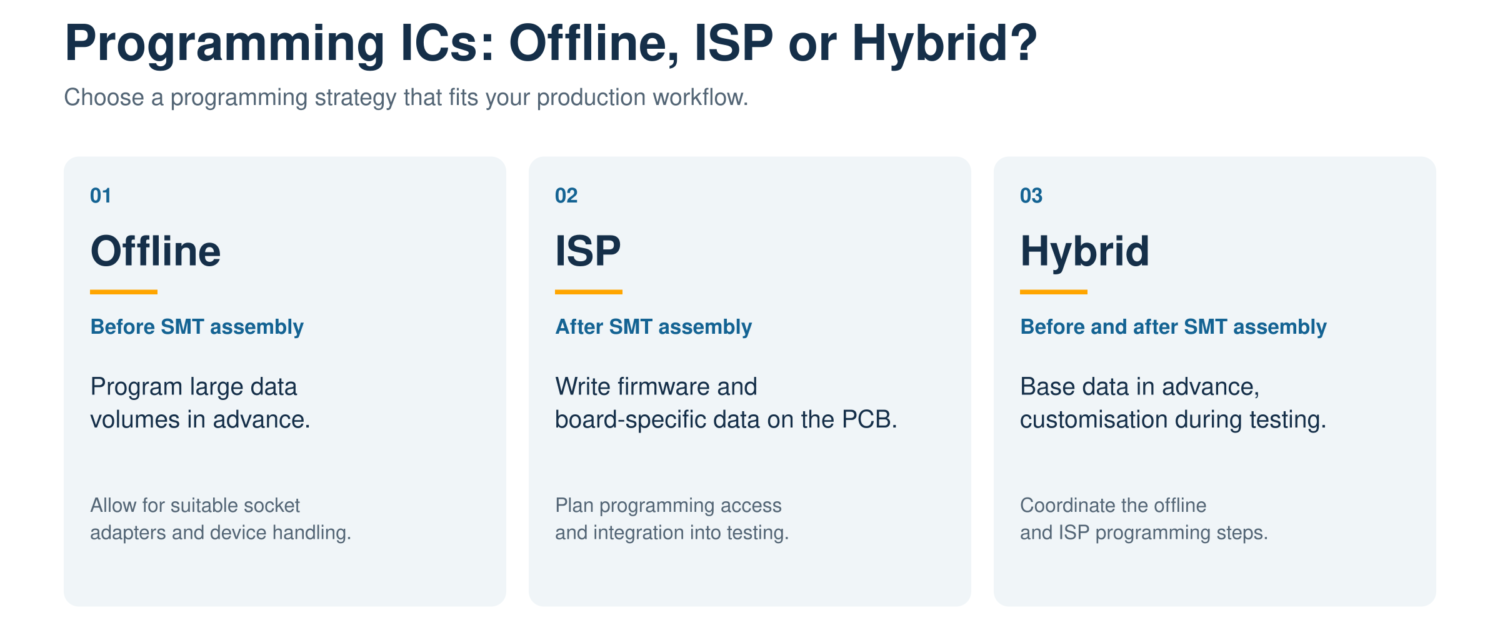
Figure 1: Offline, ISP and hybrid IC programming at a glance.
Offline programming before assembly
Offline programming, also known as out-of-circuit programming, involves programming unmounted ICs before SMT assembly. Devices are removed from their original packaging and placed in specialised sockets for programming and verification. Manual workflows use universal gang programmers, such as the DediProg NuProgPlus Series. Automated solutions include the DediProg DP3T Plus, DP1000-G5 and DP3000-G3 Plus.
Advantages
- High throughput for high-capacity memory: Devices such as UFS and eMMC can be programmed offline at high throughput, keeping long programming cycles from slowing down the SMT line.
- Earlier detection of defective devices: Faulty ICs identified during programming and verification can be screened out before assembly. This reduces their impact on downstream manufacturing processes.
- Less space required on the PCB: No dedicated programming headers, traces or test points are needed on the target PCB.
Limitations
- Less flexibility for late firmware changes: Last-minute updates may require additional handling or an alternative programming process.
- Suitable socket adapters required: A compatible socket adapter is needed for the IC package and device. This creates ongoing tooling costs.
- Risks from additional device handling: Unpacking and repacking introduce additional mechanical contact points, increasing the risk of electrostatic discharge (ESD), bent leads or damaged solder balls.
In system programming on the assembled PCB
In-system programming (ISP), also known as on-board programming, writes firmware to ICs after they have been soldered onto the PCB. This typically takes place during post-SMT testing. Interfaces such as JTAG, SWD or SPI transfer data directly to the mounted devices via test points or headers. Specialised ISP programmers, such as the DediProg SF600Plus-G2U, can be integrated into manual test fixtures or automated in-circuit test (ICT) and functional test (FCT) systems.
Advantages
- High firmware flexibility: The latest firmware and customer-specific data can be programmed at the final manufacturing stage. With a suitable design, later changes can be made without desoldering the IC.
- Less device handling: Chips remain in their original packaging until SMT placement. This reduces the lead damage and ESD risks associated with handling unmounted ICs.
- Direct integration into testing: Programming can be combined with ICT or FCT, allowing the board to be functionally tested immediately afterwards.
- No package-specific programming sockets: Connections are made through programming headers or test points on the PCB, so package-specific socket adapters are not required.
Limitations
- Potentially lower programming throughput: Programming through board-level interfaces, such as JTAG or SPI, can be slower than socket-based programming. For high-capacity memory, this may limit production throughput. Actual programming time depends on the device, interface and data volume.
- Space required on the PCB: Test points, traces or connectors must be included in the layout. This can restrict design flexibility on compact or densely populated boards.
- Product-specific test fixture requirements: A PCB design may require its own test fixture, such as a bed-of-nails adapter. This increases initial engineering and tooling costs.
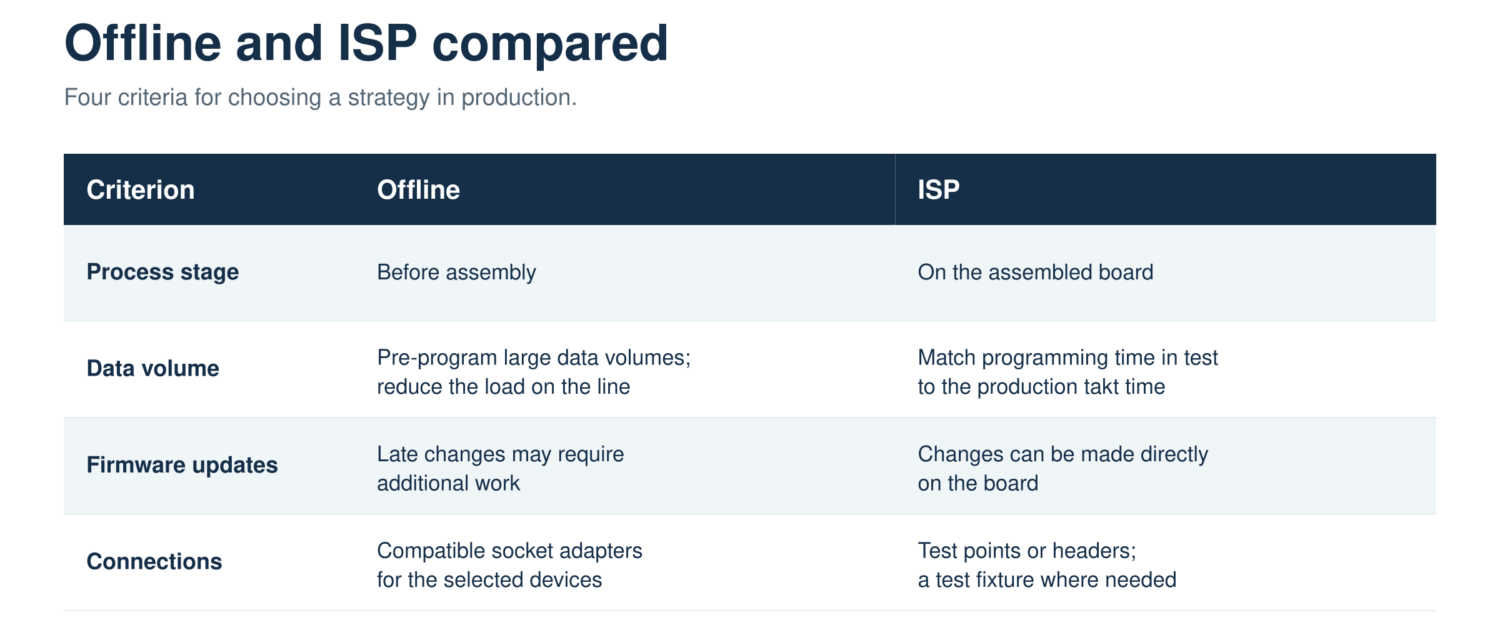
Figure 2: A direct comparison of offline and in-system programming.
Choosing the right strategy for your production
Offline programming is particularly suitable when
- you need to program high-capacity flash devices such as eMMC, UFS or parallel NAND flash.
- programming time exceeds the SMT takt time and ISP would therefore become a bottleneck for the production line.
- you want to identify faulty ICs through programming and verification before assembly.
- no PCB space is available for programming headers or test points.
- you are working with legacy boards that have no integrated ISP interface.
ISP is particularly suitable when
- you need to program firmware on fully assembled boards for production, rework or field updates.
- you manufacture multiple product variants in smaller volumes per model, and flexibility takes priority over maximum programming throughput.
- programming and board testing can be combined in a single ICT or FCT step.
- you want to avoid additional handling of very small packages such as fine-pitch BGAs or WLCSPs.
- the PCB design already includes a programming header from the development or debugging stage.
Combining both methods with hybrid programming
A hybrid programming strategy combines offline and in-system programming. It brings high data throughput and late-stage customisation together in a single manufacturing workflow.
Phase 1 Program large data volumes offline
Before SMT assembly, large firmware files, operating systems or base software are written to the unmounted ICs. This can be done manually in batches using a NuProgPlus Series gang programmer, or automatically with a system such as the DP3T Plus, which programs and repacks the ICs. Transferring large data volumes before assembly keeps this work out of the later programming step on the line.
Phase 2 Add device data using ISP
After PCB assembly, ISP programming can take place during ICT or FCT. A programmer such as the SF600Plus-G2U is integrated directly into the test platform. This step writes board-specific information, such as serial numbers, MAC addresses, calibration data, security keys or customised firmware. The device and programming solution must support the intended application.
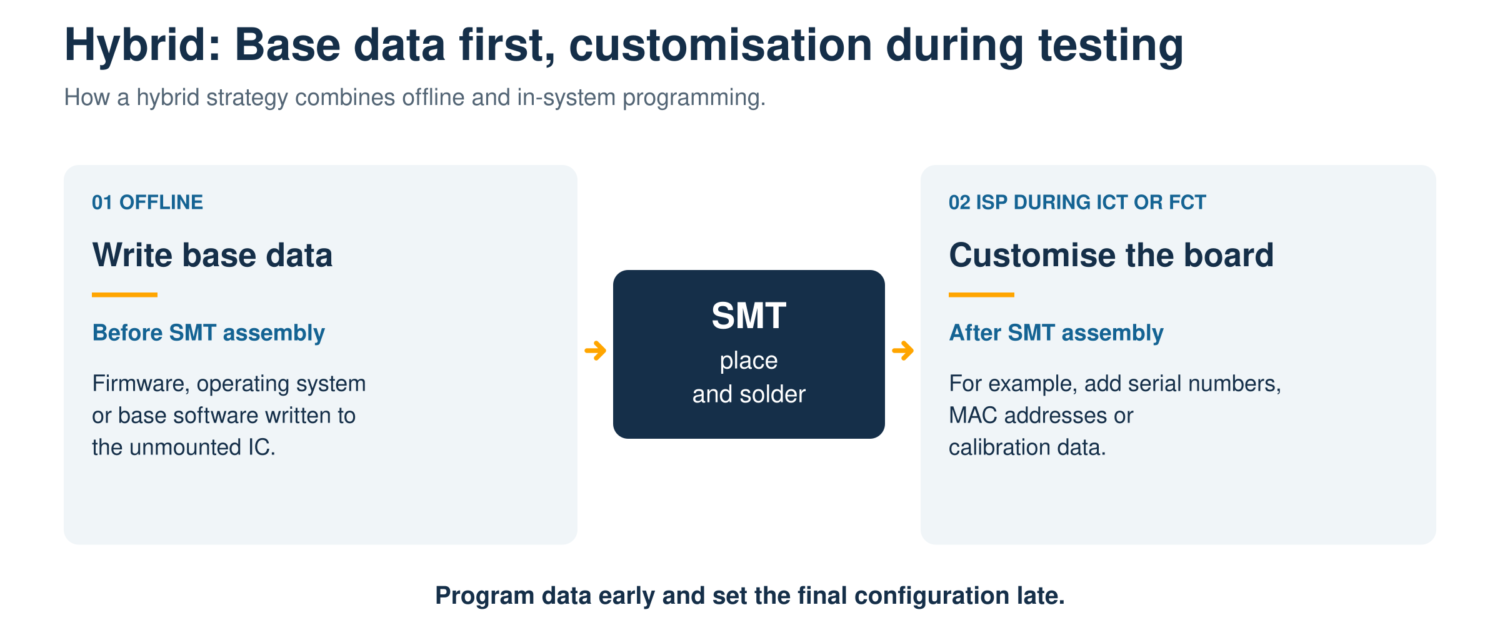
Figure 3: The hybrid IC programming workflow before and after SMT assembly.
When a hybrid approach is useful
When a product requires both large data volumes and custom configuration close to the end of production, a hybrid workflow can address both requirements.
- Efficient pre-programming of large data volumes: High-capacity memory devices, such as UFS and eMMC, receive their standard firmware offline before SMT assembly. This reduces the impact of long programming cycles on the production line.
- Late-stage final configuration: Unique product information, security data or customer-specific firmware are written during final testing. Each device therefore receives its intended configuration before shipment.
- Support for updates and maintenance throughout the product lifecycle: A suitable ISP connection allows firmware updates, feature upgrades and reprogramming during repairs.
Which programming strategy fits your production?
Our IC programming expert, Markus Auzinger, can help you find the right DediProg solution for your devices and production requirements.


 MICAS AG

